|
|
|
Washington D.C.
|
|
|
|
The
last time I was in Washington,
Dwight Eisenhower was president. (I
can't say I remember much about it but I'm pretty sure things have
changed. For those who don't remember
Ike, he was just before JFK.) For an
arid boy from Southern Cal,
DC, is hot and humid - and my friends say it's
nothing compared to what it was a few weeks ago. Glad I missed it.
And
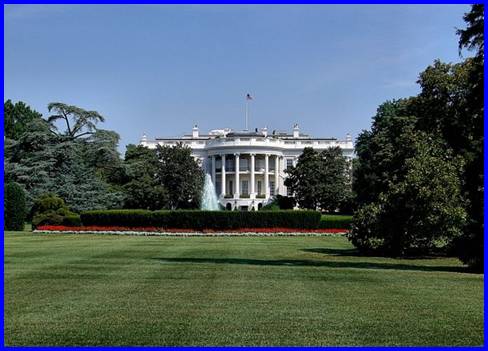
I have to confess I didn’t see anywhere near enough of Washington. It was simply too bloody hot and I was
wilting after a couple of hours of shooting – I never even got to the Lincoln Memorial. I could have cooled down by entering some
building – not Congress, of course – but then museums tend to make for forced
pictures at best. There are no good
backgrounds and hardly a framing device – like, say, a tree -- to be found
anywhere.
|
|
|
|
Congress
|
|
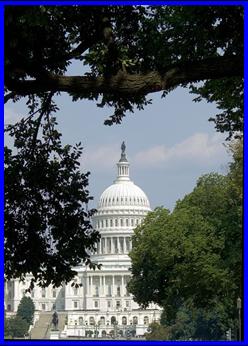 It being August,
Congress, of course, was not in session; all the members were back in their
districts running (scared) for re-election.
Congress is smart to get out of town in August. Like I said, hot and humid! It being August,
Congress, of course, was not in session; all the members were back in their
districts running (scared) for re-election.
Congress is smart to get out of town in August. Like I said, hot and humid!
There's a large security presence in DC - no surprise
under the circumstances these days -- and what with regular and private
guards, security could be the single most populated profession in the city .
. . after lobbyists.
Speaking of lobbyists, there’s a shot in the buildings
collection of the Willard Hotel
which, my hardly-ever-wrong, longest-time friend tells me, is where the term
got its name, from meetings held in the Willard’s lobby. (Remember, click on the pictures to the
left to get to more pix and then make your screen full size.)
No doubt I'm influenced by the wonderful parks and
perfect lawns of Buenos Aires,
but the lawn that fills the Mall from the Congress building to the Washington Monument
is pretty darned shabby, far more dead than alive. It would help to have the myriad shade
trees that grace Buenos Aires’s parks, to lessen the sun’s relentless
onslaught.
But there are always great photo ops in capital cities,
from buildings to statues to flowers and DC is no exception. Surprisingly to me, many of the buildings
seemed squat and bulky, a chunky Soviet quality to them. Not the Congress building of course.
|
|
|
|
Smithsonian Complex
|
|
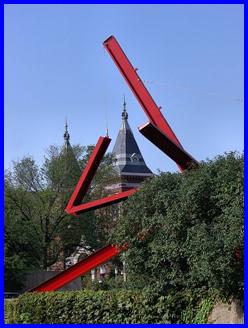 The
best pix came from the area around the Smithsonian. The buildings themselves are wonderfully
ornate, rather like the Water Building
of Buenos Aires. The Smithsonian 'castle' is a turreted
confection built in the late 19th Century - like the BA Water Building - from
the money donated by James Smithson, who wasn't even an American citizen, but
British, and the gift that spawned the complex came as a complete surprise. The
best pix came from the area around the Smithsonian. The buildings themselves are wonderfully
ornate, rather like the Water Building
of Buenos Aires. The Smithsonian 'castle' is a turreted
confection built in the late 19th Century - like the BA Water Building - from
the money donated by James Smithson, who wasn't even an American citizen, but
British, and the gift that spawned the complex came as a complete surprise.
From http://www.sil.si.edu/Exhibitions/Smithson-to-Smithsonian/intro.html:
"In 1829 English scientist Smithson
left his fortune to the people of the Un ited
States to found an institution for the "increase and diffusion of
knowledge." Smithson's impetus in
providing for a research and educational institution in a new country on
another continent remains a mystery. His bequest sparked widespread debate
over what such a national institution might be. Once established, the
Smithsonian Institution became part of the process of developing the U.S.
national identity."
“The Smithsonian Institution is now
the world's largest museum complex, composed of a group of national museums
and research centers housing the United States' national collections in
natural history, American history, air and space, the fine arts and the
decorative arts, and several other fields ranging from postal history to
cultural history. The Institution includes 16 museums, four research centers,
the National Zoo, the Smithsonian Institution Libraries (a research library
system), the Smithsonian magazine, the Smithsonian Institution Press, a
Traveling Exhibition Service, an Office of Education, and a number of other
offices and activities.”
|
|
|
|
The Hirshhorn Museum
|
|
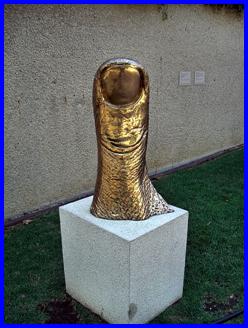 Next
to the Smithsonian (actually part of the complex) is the Hirshhorn Museum
with a garden of statues. Probably not
surprisingly, again, considering their life outdoors, almost all of them were
made of metal. (I seem to have had
trouble spelling the name, as you’ll see in the pix titles if you go
there. Too lazy to go back and change
the names.) Next
to the Smithsonian (actually part of the complex) is the Hirshhorn Museum
with a garden of statues. Probably not
surprisingly, again, considering their life outdoors, almost all of them were
made of metal. (I seem to have had
trouble spelling the name, as you’ll see in the pix titles if you go
there. Too lazy to go back and change
the names.)
From http://hirshhorn.si.edu/museum/mission.html:
"Conceived as the nation's museum of modern and
contemporary art, the [Joseph Herman] Hirshhorn Museum
and Sculpture Garden
has as its genesis a passion for collecting and for the art of our time. We continue
to foster this abiding interest in the contemporary into the twenty-first
century.
(Where’s my comment about statues??)
|
|
|
|
Vietnam Veterans War Memorial
|
|
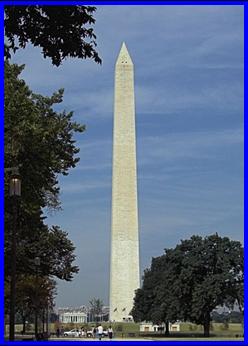 Well, sort of. I
took the metro into town with Judit, parting
company as she went to her work and I to mine. After snapping my shots of
Congress, I continued up the Mall to the Washington Monument,
at the base of which is The Vietnam
Wall, to take pix there. Bummer! New policy: it's still free but now it's
all fenced in, you have to get a ticket from a booth outside the fencing, and
text block of time I could get a ticket for was in another couple of
hours. Well, sort of. I
took the metro into town with Judit, parting
company as she went to her work and I to mine. After snapping my shots of
Congress, I continued up the Mall to the Washington Monument,
at the base of which is The Vietnam
Wall, to take pix there. Bummer! New policy: it's still free but now it's
all fenced in, you have to get a ticket from a booth outside the fencing, and
text block of time I could get a ticket for was in another couple of
hours.
That was far too late since I was at the end of my
walkabout and so I arranged with Robert to go in again on Friday to have
lunch with his book collaborator, David, and his son. We got in a bit early so I could take a
taxi to the memorial, get my ticket, and return to
join them for lunch.
And another bummer!
By early afternoon, *all* the time slots for that day were already
filled. Not only that, the taxi ride,
a matter of perhaps 15 minutes, set me back nearly $20. So if you look *very* carefully at the base
of the obelisk - magnifying glass recommended -- you can see a few American
flags - and *that's* where the Vietnam
Veterans Memorial Wall is.
Be warned about that new policy; I was told by some
friendly tourist police that it was permanent. Websites about the Memorial didn’t yet say
anything about it while I was there.
(Note: the accompanying photo links to same group as the Congress
building photo does.)
|
|
|
|
Statues
|
|
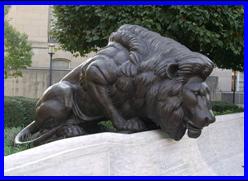 Capitol cities are always
full of statuary and DC is no exception.
(I still have a strong preference to Buenos Aires,
though, with its statues set within great photographic locations and generous
trees for framing. Am I too nostalgic
over Buenos Aires?) Capitol cities are always
full of statuary and DC is no exception.
(I still have a strong preference to Buenos Aires,
though, with its statues set within great photographic locations and generous
trees for framing. Am I too nostalgic
over Buenos Aires?)
As I mentioned about the buildings, some of the friezes
seemed straight out of Stalin’s Soviet Realism era of art, but among the
statues photo there’s a delightful one of a fountain with a naked woman
riding a horse that’s getting squirted right in the forehead by one of the
jets. Seemed ignominious.
|
|
|
|
On the Street
|
|
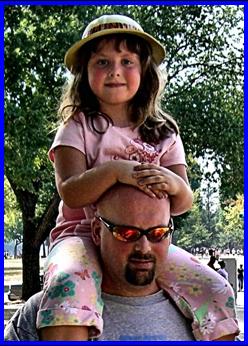 The people on the streets of DC are
probably much like those in other big cities anywhere. There’s the usual proportion of people
holding conversations with either themselves, an
imaginary companion, or God, and various protestors and rag-pickers. The people on the streets of DC are
probably much like those in other big cities anywhere. There’s the usual proportion of people
holding conversations with either themselves, an
imaginary companion, or God, and various protestors and rag-pickers.
There is also a huge presence of homeland tourists – I
would expect it to be the city most visited by American tourists. (Places like Orlando might get the nod for
total visitors.) Though not known as a
person with a natural enchantment by children, not even I could resist
snapping the cherub to the left riding her sun-glassed, skinheaded
daddy – who turned out to be deaf.
|
|
|
|
Flora
|
|
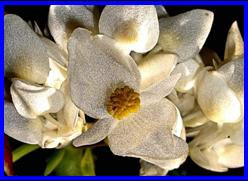 Holly
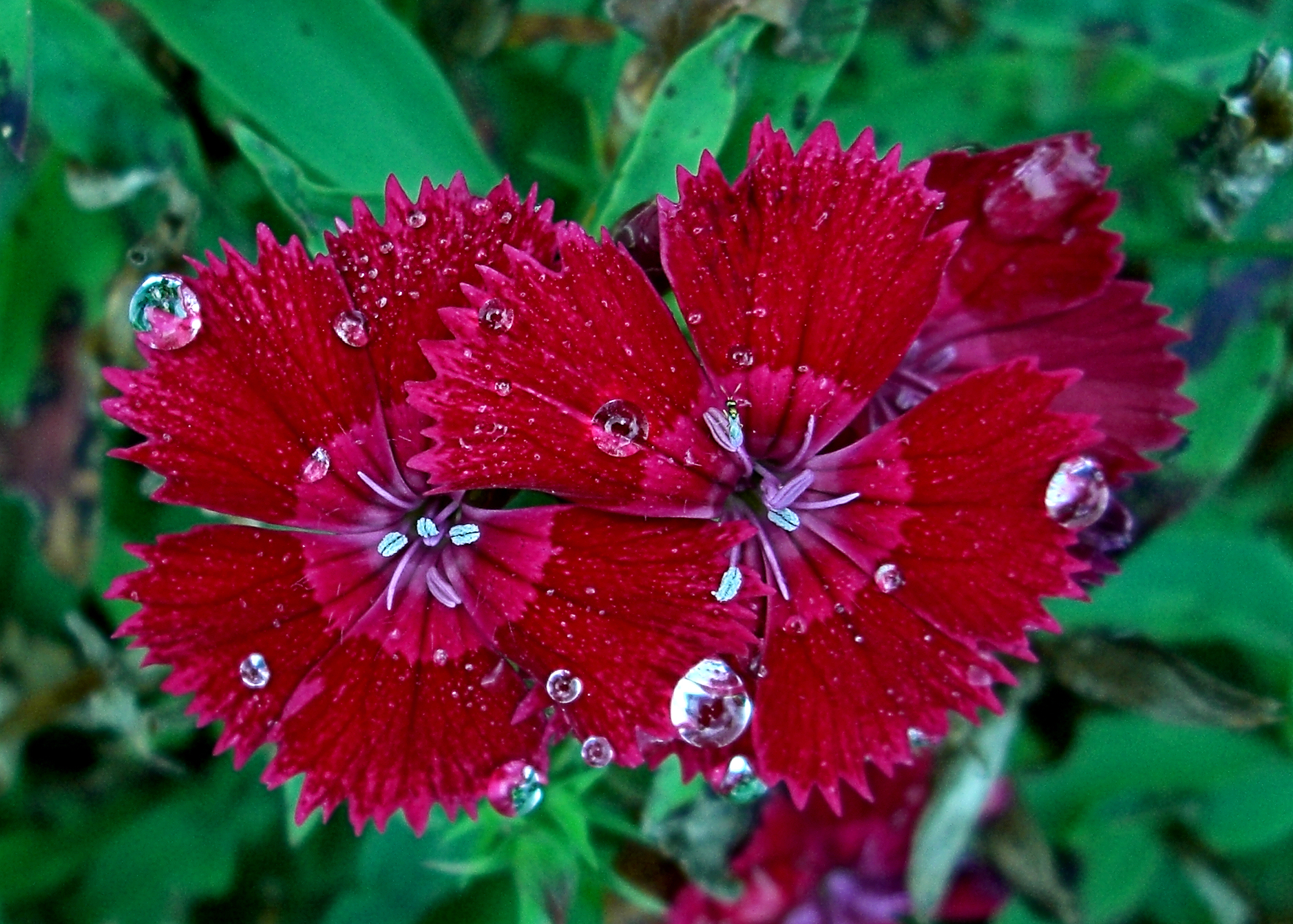
coined a phrase about me during our photo safaris: God makes ‘em and I takes ‘em. It’s true: I find flowers irresistible,
with their colors and symmetries. Many
of the pix you’ll end up seeing in this write-up will be of flowers, perhaps
more than really necessary – but how can you tell which picture is just the
perfect one or that another better picture might not have just now
appeared? Plus the new toys and tools
I’ve learned in the software. Here’s a
starter sampler of flowers from the DC area. Holly
coined a phrase about me during our photo safaris: God makes ‘em and I takes ‘em. It’s true: I find flowers irresistible,
with their colors and symmetries. Many
of the pix you’ll end up seeing in this write-up will be of flowers, perhaps
more than really necessary – but how can you tell which picture is just the
perfect one or that another better picture might not have just now
appeared? Plus the new toys and tools
I’ve learned in the software. Here’s a
starter sampler of flowers from the DC area.
|
|
Okay, that was D.C.
Not very comprehensive, I’m afraid, but there wasn’t much time unless
I wanted either to melt with long days or wear myself ragged by going in
every day. On to New England!
|
|
Boston
|
|
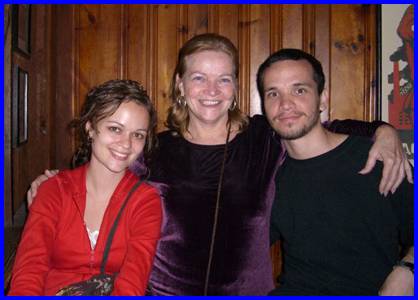
So to Boston to visit Holly, who’s staying
with her son Tim and his wife Michelle.
Tim and Michelle are every parent’s dream: they took a year off after
undergraduate studies to get to know the real world to teach and are now both
in Boston on full scholarships, just starting their Ph.D. programs. Tim is at Brandeis, planning to study
medical physics while Michelle is at Harvard Divinity. They live in Somerville,
a short walk to Harvard, a quick subway to Brandeis, in a wonderfully funky
apartment, one of four in an aging house, reminiscent of many of the places
that held my hat in my own college days.
These must be the best years of their lives coming up.
|
|
|
|
Flora
|
|
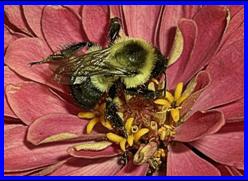 Well, there’s not too much new to say in the flower
sections so I’ll use ‘em for comments that don’t
seem to fit elsewhere. Well, there’s not too much new to say in the flower
sections so I’ll use ‘em for comments that don’t
seem to fit elsewhere.
Massachusetts
is a tough town for smokers. Not a
chance anywhere inside a public establishment, of course; in fact, there were
many signs which warned there was no smoking within 25 feet of ‘em, even on the sidewalks. Worse was that most outside portions of
cafes didn’t allow smoking either or, when they did, those tables were
already packed. And I was kicked out
of my Cambridge
rental because my clothes smelled of smoke.
I had been ‘upgraded’ from a cheap basement rental,
before my occupancy, after someone dropped by the B&B and wanted to rent
my discounted room for the college season, so I was getting that upgraded
room at about a third the price normally charged. My eviction was on the second day, after a
couple had come by to inspect my new digs, also interested in renting for the
season. Apparently, I didn’t smell
enough of smoke on the first day.
Color me suspicious but I think someone was blowing you-know-what up my you-know-where.
Mercifully, Tim and Michelle took pity on me and I spent
the week in Boston crashing on the living room’s oversize beanbag – talk
about your college memories!
|
|
|
|
Buildings
|
|
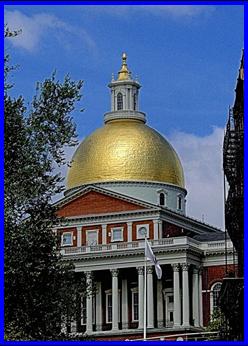 Again – the comparisons between Buenos Aires,
as a photographic opportunity. Boston
is where American independence was born and it certainly doesn’t lack for
important historical buildings, statues, cemeteries, etc. But Boston is a pretty compact city
and it’s hard to get enough distance to get good pix. Again – the comparisons between Buenos Aires,
as a photographic opportunity. Boston
is where American independence was born and it certainly doesn’t lack for
important historical buildings, statues, cemeteries, etc. But Boston is a pretty compact city
and it’s hard to get enough distance to get good pix.
I Googled trying to find out
just how many colleges and universities there are within a twenty-mile circle
centered somewhere near Cambridge
but couldn’t find out. But there are
an awful lot of them. There’s Cambridge College
of course, Harvard, and M.I.T., in the town of Cambridge
alone. Then there’s Brandeis, Tufts,
Boston University, and perhaps a dozen or two more in that circle (I must be
missing several well known ones).
Buenos Aires
certainly can’t say that.
|
|
|
|
Peabody Museum
|
|
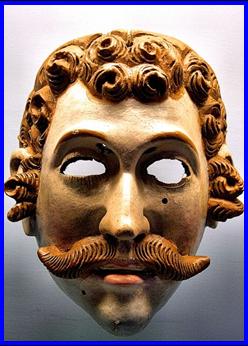 The Peabody Museum
of anthropology is located near the Harvard Divinity School
grounds, with a connected museum of biology and mineralogy -- and probably
more, but time ran out. (At least I
got into a museum in Boston!) The Peabody Museum
of anthropology is located near the Harvard Divinity School
grounds, with a connected museum of biology and mineralogy -- and probably
more, but time ran out. (At least I
got into a museum in Boston!)
From http://www.peabody.harvard.edu/general_information.html: “Founded in 1866, the
Peabody Museum is one of the oldest museums in the world devoted to
anthropology and houses one of the most comprehensive records of human
cultural history in the Western Hemisphere.”
The picture here was in what I thought was the pre-Colombian
section, I think, but that can hardly be right. Perhaps some pre-Colombians had mythical
blonds, but surely not with curly hair and mustache, which would be totally
out of their experience, I think. I
think I must not have been paying enough attention.
A building connected to the Peabody had a lot of gems and
minerals but this is where my photo technique failed me, I kept taking them
out of focus. Living and learning.
|
|
|
|
Church
|
|
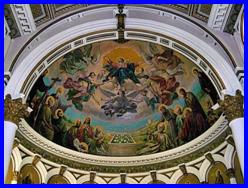 One thing is very clear, though: the flamboyant Catholics
do cemeteries better than the dour Protestants who dominated New England. The same with the Protestant churches, of
course, but we did find a Catholic church with lovely architecture and
decorations. One thing is very clear, though: the flamboyant Catholics
do cemeteries better than the dour Protestants who dominated New England. The same with the Protestant churches, of
course, but we did find a Catholic church with lovely architecture and
decorations.
As most of you will know, England’s
religious Dissenters were the largest source of early immigrants to its North
American colonies. The Dissenters were
decidedly and emphatically not
flamboyant in their relationships with God and their tombstones and churches
show it, nothing like the marvelous tombs and statuary of the Recoleta Cemetery
in Buenos Aires. We took several pictures of the gravestones
but they just didn’t have the individual impact of Recoleta’s
mausoleums. (MSWord tells me there’s
no such word as ‘mausolea,’ as in datum/data, yet
Holly informs me that the OED prefers mausolea. But I digress.) But the impact of many such humble markers
is cumulative; in retrospect, I should have taken more overall pictures of
the cemetery.
One more thing about those more substantial structures,
they didn’t tilt over with time. Many
of the modest slabs of the Boston Protestants just
couldn’t, er, stand up to the ages.
|
|
|
|
Statuary
|
|
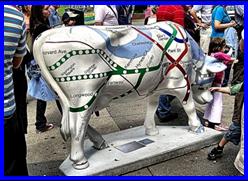 What is it with these cows? Those of you who went through the pictures
associated with the Argentine TwBs will remember
that Buenos Aires
had a Cow Festival with decorated cows scattered throughout the city. Imagine our surprise to find the same
damned thing in Boston. (This makes some sense in Argentina,
known as beef country, but doesn’t seem to fit with Boston. I mean, Chicago or Kansas City
maybe . . . but Boston?? On the other hand, Argentine menus
sometimes seemed more like pig country than beef.) What is it with these cows? Those of you who went through the pictures
associated with the Argentine TwBs will remember
that Buenos Aires
had a Cow Festival with decorated cows scattered throughout the city. Imagine our surprise to find the same
damned thing in Boston. (This makes some sense in Argentina,
known as beef country, but doesn’t seem to fit with Boston. I mean, Chicago or Kansas City
maybe . . . but Boston?? On the other hand, Argentine menus
sometimes seemed more like pig country than beef.)
As with Buenos Aires,
the cows were there in their myriads and I could bore the bejeebers
out of you with lots of pix, but you’ve been spared. What I have done, though, is toss in a
couple of cows from Argentina,
too, for comparison. The first two are
from Boston, the next two are Holly’s shots from Argentina. (She took better cow pix in both places
than I did.)
As you can see from the two examples from Boston and Buenos Aires,
they sure look to be made from the same molds. Do you suppose they ship them from country
to country, each new artist painting over the work of the previous one? I think I recall Carin
telling me that the ones in Buenos Aires
were eventually to be sold at auction.
|
|
|
|
Sky
|
|
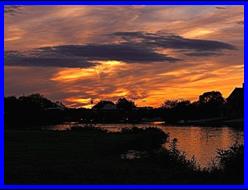 That’s
sunset over the Charles River. (I tried to get some
scull-rowing-on-the-Charles pix but I was too slow with my camera and they
were too quick with their oars. I
think Holly has one that worked, though.) That’s
sunset over the Charles River. (I tried to get some
scull-rowing-on-the-Charles pix but I was too slow with my camera and they
were too quick with their oars. I
think Holly has one that worked, though.)
I toyed a bit with the on-board red filter during the
shoot. The true colors on that
particular day weren’t as you see them to the left. But there are such sunsets on other days.
Is it fraudulent to ‘doctor’ a scene with filters if it’s still a fair
representation of some other day? What
if there never were such a sunset on some other
day? Fraudulent now?
More Than You Wanted to Know Warning: Color is simply the
way your brain represents to your mind the pattern of nerve cells responding
to stimuli on your retina: it’s like a code and ‘sky
blue’ is the code for one particular firing pattern. Those cells either
fire or they don’t, no variation in strength, all very binary – and there are no colors ‘out there.’ Who knows what ‘color’ you see in your
mind’s presentation of this binary data?
Would it be the same as mine?
The typed letter ‘H’ doesn’t sound like ‘aitch’ by itself -- it’s just marks, no sound at all
-- but when presented to the English-speaking mind it does. Present that same typed letter to a Russian
mind and it sounds like ‘enn.’ Whose mental representation is the real
one? (And sound, of course, is just
the way the mind presents the pattern of nerve cells responding to stimuli on
the eardrum anyway.)
(Deep Question Alert: Ponder the difference between brain
and mind -- how do binary biological nerve signals received by the brain
cross the boundary to the mind’s conscious ‘image’ of color? But I digress again.)
I could’ve made that sunset green, but that would be as
upsetting as that relatively new green Heinz Ketchup is – upsetting to my
generation at least. I’m told kids too
young to have formed the prejudice about it looking like tomatoes love the
color. An amazing bit of market
research when you think about it. I
mean, who would have expected this?
On to Maine.
|
|
Maine
|
|
|
|
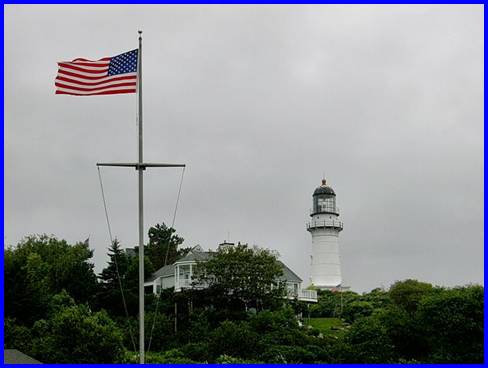
Holly was born in upstate rural New York
but grew up in Maine
at the end of a spit of land where she could see the beacons of a half dozen
lighthouses from her bedroom window. Hurricane
Ernesto’s dying gasps blanket the northeast as we roll into Maine, somehow appropriate for
lighthouses.
|
|
Old Orchard Beach
|
|
 Holly and I do some e-searching for
places to stay – it’s Labor Day weekend – and find a
nice one for the two days after the holiday but nothing that looks good for
Saturday and Sunday. The weather is
looking pretty terrible, though, so we decide to take our chances. (There’s still a lot more that’s not on the internet than there is
that’s on.) Holly and I do some e-searching for
places to stay – it’s Labor Day weekend – and find a
nice one for the two days after the holiday but nothing that looks good for
Saturday and Sunday. The weather is
looking pretty terrible, though, so we decide to take our chances. (There’s still a lot more that’s not on the internet than there is
that’s on.)
Ernesto has ruined one of New England’s prime holidays and
we have no trouble finding a place to stay, a charming – and old – little
place, with individual kitchen-equipped bungalows, in Old Orchard Beach, near
the amusement pier where Holly spent many a teenaged hour.
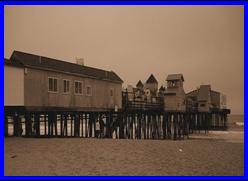
It’s overcast, cold, and rainy – a disaster for the pier
as well as for the numerous cottages and eateries, but it gives us cheap
rates and a new set of circumstances for taking pix: under the circumstances,
sepia and black-and-white seem appropriate. The large ATM sign on the picture to the
left betrays the fact that it’s not a blast-from-the-past photo.
Holly’s memory of it is like my memory of the house I
lived in after my family’s emigration from Sweden when I was two, until I
needed two digits to count birthdays.
I went back to it many years ago as an adult and was amazed how much
smaller the rooms seemed, the fewer steps needed to cross them, how much
closer the ceiling was. Holly
remembers the pier being bigger, though her years there were nearly adult
ones. Perhaps the overcast made it
feel closed in.
|
|
|
|
Flora
|
|
 One
thing about Maine
was a continuing surprise to me: the number of businesses that are run out of
private homes. I don’t know if they’re
the rarity or perhaps California
simply zones differently from most of the rest of the country. Lawyers, beauty parlors, and even dentists
operated out of the
house. Aside from
semi-retired accountants and the odd Tarot reader out here, hardly anyone has
a business at home, the separation is just about
total. Perhaps we have more land out
here, to keep them apart. It’s hard to
see how it can be more economical
to have it our way. One
thing about Maine
was a continuing surprise to me: the number of businesses that are run out of
private homes. I don’t know if they’re
the rarity or perhaps California
simply zones differently from most of the rest of the country. Lawyers, beauty parlors, and even dentists
operated out of the
house. Aside from
semi-retired accountants and the odd Tarot reader out here, hardly anyone has
a business at home, the separation is just about
total. Perhaps we have more land out
here, to keep them apart. It’s hard to
see how it can be more economical
to have it our way.
One of the great charms of the East Coast in general,
compared to SoCal, is the total lack of billboards
along their major highways, just the greenery of trees all the way – until
winter, at least. Somehow, LBJ’s wife Ladybird Johnson’s highway beautification
initiative had much more effect there than it did out here and the
advertisements strung along our highways compete with one another, let alone
the sky. Maybe Ladybird banned
billboards from within something like 200 or 300 feet of the highway. In New England, that puts you into the
trees, no point in erecting one there.
In California,
many times that just puts you beyond a little mesquite cactus and
desert. On the other hand, even near San Francisco,
with far more trees, they don’t seem to lack for billboards, just erecting
them on higher poles. Hideous
things.
|
|
|
|
Inn at St John
|
|
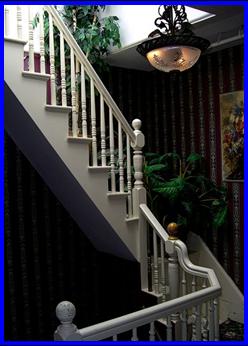 Our hotel in Portland bills itself as the
oldest continuing hotel in Maine, the Inn at St John. It’s a charming old place, with very modern
conveniences, and charming little touches everywhere, a dark, Victorian feel
to it. The lobby’s chairs are what I suppose
to be brocade, set within dark red walls stocked with dark polished
furniture, Tiffany lamps,
a replica of an old phone.
A delicate Oriental vase and stained-glass waterfall grace the
stairway entry. Our hotel in Portland bills itself as the
oldest continuing hotel in Maine, the Inn at St John. It’s a charming old place, with very modern
conveniences, and charming little touches everywhere, a dark, Victorian feel
to it. The lobby’s chairs are what I suppose
to be brocade, set within dark red walls stocked with dark polished
furniture, Tiffany lamps,
a replica of an old phone.
A delicate Oriental vase and stained-glass waterfall grace the
stairway entry.
We’re in the cheap seats, on the third floor, with a
shared bath where we never saw signs of anyone else. The stairways are labyrinthine, turning 90
degrees several times on the way to our room.
It’s a nice room, small fridge, washbasin, decoratively folded towels,
and, strangely to me, no door to the closet that could be seen over my feet
when I lay in bed. (Why didn’t I think
to take a picture of that little
gem?)
Have I mentioned the world is getting quite hostile to
smokers? There was no smoking in the
rooms, of course, but nor was there some special room or even the ability to
go out on the fire escape on our floor– An Alarm Will Sound, announced the
sign. No, the only way to have a puff
was to walk down those winding steps and step outside. And then trudge back up those three
flights. Isn’t that just a little bit
punitive?
First I’m kicked out of a room I’d booked and paid for,
even after Holly told the owner that I was a smoker but would smoke
outside. Then there’s hardly a seat at
the few outside tables in the few Massachusetts
restaurants that even permit smoking outside.
Now I, a smoker, must huff and puff up three flights of stairs after
every fag? What can they be thinking?
|
|
|
|
Church
|
|
 We did a little creative aimless meandering and ended up
in a posh area of Portland,
a town Holly knows well, and ran into an empty church full of one of my new
fascinations, stained-glass windows.
I’m pressing the limits of handheld photos with these digitals, I’m
afraid. As I said, there’s a lot of
creative control on our cameras and to get the best clarity, I force the film
to a low ISO/ASA
number, which means slow shutter speeds must be used but I get more
detail. I’m still looking for a
six-foot, lightweight tripod that telescopes into less than a foot and
weights only a few ounces. And
cheap. Tell me if you know of
one. In the meantime, I brace the camera
on a pew and try to hold the thing still for a 15th of a second or
even worse. All could be better, but
some are good enough. We did a little creative aimless meandering and ended up
in a posh area of Portland,
a town Holly knows well, and ran into an empty church full of one of my new
fascinations, stained-glass windows.
I’m pressing the limits of handheld photos with these digitals, I’m
afraid. As I said, there’s a lot of
creative control on our cameras and to get the best clarity, I force the film
to a low ISO/ASA
number, which means slow shutter speeds must be used but I get more
detail. I’m still looking for a
six-foot, lightweight tripod that telescopes into less than a foot and
weights only a few ounces. And
cheap. Tell me if you know of
one. In the meantime, I brace the camera
on a pew and try to hold the thing still for a 15th of a second or
even worse. All could be better, but
some are good enough.
|
|
|
|
Sky
|
|
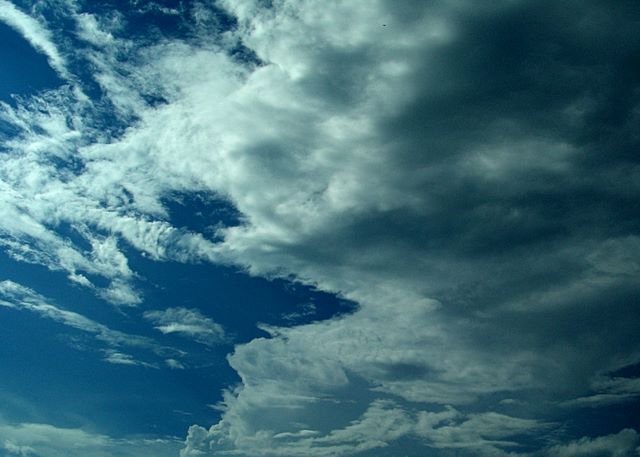
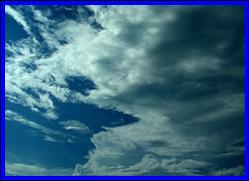
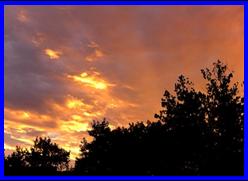 No
green tomatoes in this set, but there’s quite a nice one of a cloudy late
afternoon reflecting dramatically over some mud flats. No
green tomatoes in this set, but there’s quite a nice one of a cloudy late
afternoon reflecting dramatically over some mud flats.
No complaints about the weather in Maine, there was the full gamut
of it, from rain to overcast to patchy clouds to full sun. We weren’t there quite late enough to see
New England’s autumn glory but we did catch one species of tree that turns
red a few weeks before the others.
|
|
|
|
Buildings
|
|
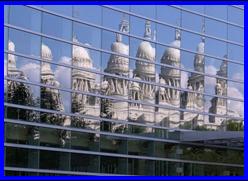 Not far from the church where we
took those pictures is a park and walkway overlooking the distant harbor,
with lots of posh houses, very New England
Elite looking, phenomenal number of bedrooms. And our drives through Holly’s ancestral
stomping grounds take us past many others.
The architecture and materials are different from those on the West
Coast, of course. Most of California
never gets snow so peaked roofs out here are decorative, not mandatory. And it makes sense to use local materials,
of which New England
had more wood and we had more of whatever it takes to make stucco or adobe. Not far from the church where we
took those pictures is a park and walkway overlooking the distant harbor,
with lots of posh houses, very New England
Elite looking, phenomenal number of bedrooms. And our drives through Holly’s ancestral
stomping grounds take us past many others.
The architecture and materials are different from those on the West
Coast, of course. Most of California
never gets snow so peaked roofs out here are decorative, not mandatory. And it makes sense to use local materials,
of which New England
had more wood and we had more of whatever it takes to make stucco or adobe.
It was nice to leave the driving to someone who knew the
territory and the people in it. One of
Holly’s neighbors is a man now in his eighties who was a foreign
correspondent for one of the US
networks. He was still mentally active
and we spent a couple of hours in his home, talking about current events and
his colorful, adventurous past. He was
stationed mostly in Japan,
lived there some 30 years if I recall correctly, and his house was another
Victorian delight, with scores or hundreds of bits and pieces from the Orient
scattered throughout the living room.
But it’s much like a museum, no good backgrounds, no good framing
devices, and the one picture in the set of his bric-a-brac is as dull as
dishwater.
Southwest Airlines doesn't fly from Boston so I take the commuter
train to Providence, Rhode Island,
then a taxi to the airport to
catch my homeward flight. We get
stopped at a signal where I can get this super distorted shot of their
capitol building. (There’s a normal
view of the capitol in the Picasa set.) I wonder if that’s what it would look like
if we could see in all those extra dimensions cosmologists tell me are
lurking about.
And now on to something completely different: Cancun, Mexico!
|
|
Cancun
|
|
|
|
How did I get to Cancun, you ask? It happened this way: Holly was to hop on a
plane for her new job in Kuwait
by the middle of September but her visa was stalled in the bureaucracy and
they wouldn’t be done for a few weeks yet.
Holly has a time-share membership which lets her get rooms in
participating hotels for quite good prices and a long-standing interest in
things Mayan so off we went for a week in Maya Country.
|
|
And
just to confuse you, I’ll try a new method in this last section. Rather than one example piocture
from each set, one per topic, I’ll sprinkle lots of pix into a topic. From here on, if you want to get to the Picasa thumbnails page, click on the topic title at the
top of each subject. If you want to go
directly to a blowup of one of the small pix here, just click on it.
|
|
Picture Title in bold 18
pt Times New Roman
|
|
(2” picture, additional text, reg 14 pt Times New Roman, indented .5 inches from
right.)
|
|
Miscellaneous
|
|
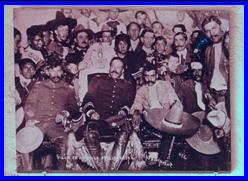 Holly
and I wandered into Playa del Carmen, the town actually nearest our hotel,
the Mayan Palace
Resort. Lunch is in a pleasant
open-air restaurant owned by a Mexican history buff who
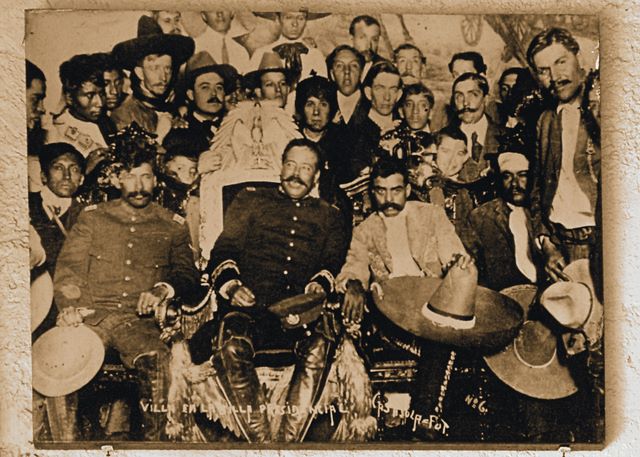
has several old photo reproductions on the wall. One is of Pancho
Villa and Emiliano Zapata. That’sVilla
sitting, for photo purposes only, in the Presidential chair, the spit and
image of Saddam Hussein. Another
picture in the set is of Zapata looking very much the romantic revolutionary. The third is what looks like an
over-the-top firing squad but was surely just some posed picture for the
camera. Holly
and I wandered into Playa del Carmen, the town actually nearest our hotel,
the Mayan Palace
Resort. Lunch is in a pleasant
open-air restaurant owned by a Mexican history buff who
has several old photo reproductions on the wall. One is of Pancho
Villa and Emiliano Zapata. That’sVilla
sitting, for photo purposes only, in the Presidential chair, the spit and
image of Saddam Hussein. Another
picture in the set is of Zapata looking very much the romantic revolutionary. The third is what looks like an
over-the-top firing squad but was surely just some posed picture for the
camera.
|
|
 Holly
soldiers through one of those timeshare presentations, with the prize being a
couple of tix for a tour of Chichen Itza.
It doesn’t start well. First,
there’s some confusion about where we’re to meet the bus and somehow, we’re
told, that the we and the bus were at the right place at the right time but
overlooked one another. Seems
unlikely. I mean, sure, we could have missed seeing the bus
but we can’t be the first clueless and disoriented tourists they’ve ever
picked up; they must surely be on
the lookout for the witless.
Fortunately, the formidable combination of a professional worrier and
a dedicated warrier overcome the problem in time and Holly and I are picked
up by a taxi to rejoin the tour bus some 15 klicks away, where the tour
leader pays the taxista. Holly
soldiers through one of those timeshare presentations, with the prize being a
couple of tix for a tour of Chichen Itza.
It doesn’t start well. First,
there’s some confusion about where we’re to meet the bus and somehow, we’re
told, that the we and the bus were at the right place at the right time but
overlooked one another. Seems
unlikely. I mean, sure, we could have missed seeing the bus
but we can’t be the first clueless and disoriented tourists they’ve ever
picked up; they must surely be on
the lookout for the witless.
Fortunately, the formidable combination of a professional worrier and
a dedicated warrier overcome the problem in time and Holly and I are picked
up by a taxi to rejoin the tour bus some 15 klicks away, where the tour
leader pays the taxista.
|
|
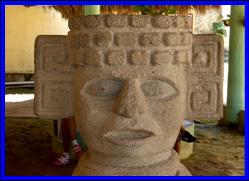 It doesn’t look good when
we’re driven through some insignificant town with a pretty boring church and
don’t even have a stop to take any pictures.
Then we’re dropped into one of those places where the tourists are
encouraged to buy horrible little things, the equivalent of horses with
clocks in their middles, at laughable prices.
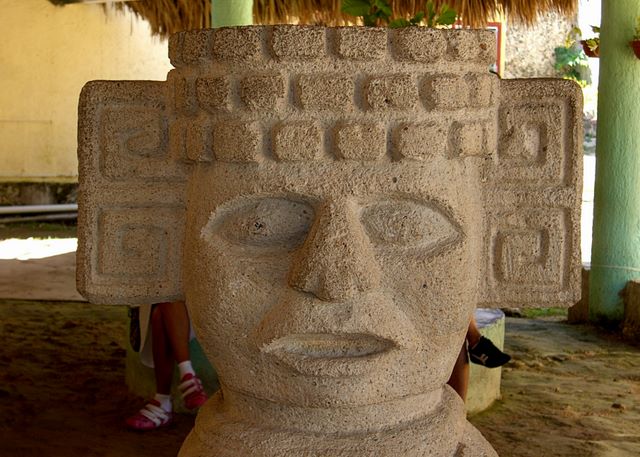
But they have some colorful representations of Mayan art on the walls
which make for some good photos and I get an amusing picture of a stone icon
with legs dangling from the ears. It doesn’t look good when
we’re driven through some insignificant town with a pretty boring church and
don’t even have a stop to take any pictures.
Then we’re dropped into one of those places where the tourists are
encouraged to buy horrible little things, the equivalent of horses with
clocks in their middles, at laughable prices.
But they have some colorful representations of Mayan art on the walls
which make for some good photos and I get an amusing picture of a stone icon
with legs dangling from the ears.
|
|
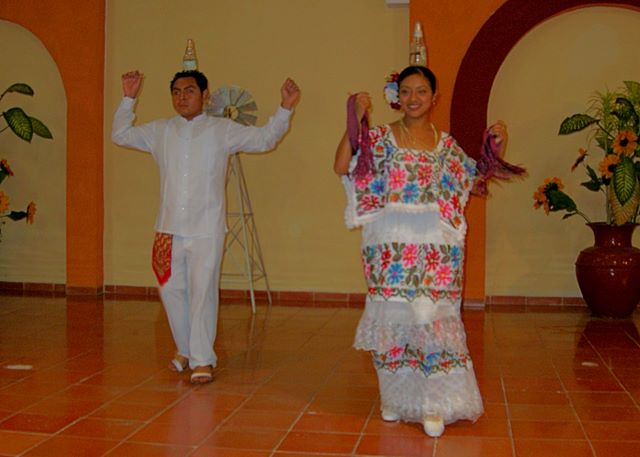
 It gets better with lunch,
a surprisingly good all-you-can-eat meal in a large hall devoted to serving
tourists from steel buffet bins. The
entertainment is a half-dozen dancers in colorful native costume dancing with
bottles or trays of bottles on their heads.
Again, it’s surprisingly not all that bad but photographs rather
badly. It gets better with lunch,
a surprisingly good all-you-can-eat meal in a large hall devoted to serving
tourists from steel buffet bins. The
entertainment is a half-dozen dancers in colorful native costume dancing with
bottles or trays of bottles on their heads.
Again, it’s surprisingly not all that bad but photographs rather
badly.
|
|
 Another prize from sitting
through that timeshare presentation is a couple of tickets on a boat ride,
featuring a portholed hull through which tourists can view the Undersea
World; Hugely Disappointing. The water
was murky, the terrain not all that interesting, mostly low kelp, a few
species of coral, a few of fish. There
might have been more, but visibility wasn’t much more than twenty feet. I wish I’d taken a picture of the
billboards that advertised these trips, a sleek-hullled ship with happy
tourist faces peering out the portholes.
In practice, the ship was a floating box and the viewing windows were
rectangles, not porthole round thingees. Another prize from sitting
through that timeshare presentation is a couple of tickets on a boat ride,
featuring a portholed hull through which tourists can view the Undersea
World; Hugely Disappointing. The water
was murky, the terrain not all that interesting, mostly low kelp, a few
species of coral, a few of fish. There
might have been more, but visibility wasn’t much more than twenty feet. I wish I’d taken a picture of the
billboards that advertised these trips, a sleek-hullled ship with happy
tourist faces peering out the portholes.
In practice, the ship was a floating box and the viewing windows were
rectangles, not porthole round thingees.
But I did get a picture of
a couple apparently from a snorkel dive, who shared our tender back from the
sightseeing boats to the docks. I’m
not sure that people that, er, immense really ought to be going out in
bathing suits but, hell, who am I to judge?
Be honest, though – when you first saw those heads you thought ‘furry basketballs!’
didn’t you?
|
|
The following is various cuts-and-pastes from the Wikipedia entry for Cancun:
“In the early 1950s, Cancún was an
almost insignificant island just off the Caribbean Sea coast of the Yucatán peninsula, home to
three caretakers of a coconut plantation and small Pre-Columbian ruins of the Maya civilization. The
government of Mexico decided to develop a tourist resort on Cancún, which was
originally financed by a USD $27 million loan from the Inter-American
Development Bank.”
“Unfortunately, the original very
sensible master plan was repeatedly modified and, on the mainland, often
ignored. . . . [M]unicipal authorities
have struggled to provide public services for the constant influx of people,
as well as to control squatters and irregular developments, which now occupy
an estimated ten to fifteen percent of the mainland area on the fringes of
the city.”
“In Cancún there are about 140[!]
hotels with 24,000[!!] rooms and 380 restaurants[less than three per hotel? Maybe they don’t count the restaurants in hotels.]. Four million visitors
arrive each year in an average of 190 flights daily. The hotel zone is one of
the most exclusive internationally, with upmarket restaurants, bars, and the
like which have catered for quite a number of the rich and famous. The hotel
zone tends to be rather expensive as it is aimed at visitors and relies on
the all inclusive hotels to keep them all in this area allowing prices to
soar. Downtown is home to less expensive places to shop like Walmart,
Comercial Mexicana and Soriana, not to mention several flea markets like the
one in the hotel zone.”
|
|
Chicken Pizza
|
|
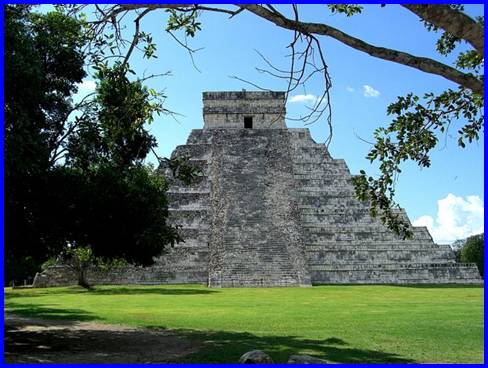
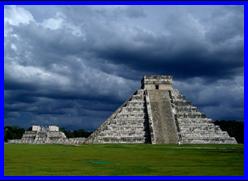 It’s actually Chichen Itza,
of course, but the guides have a giggle at the expense of the tourists’
mangling of the name with this little witticism. (Wiki: The name is often represented as Chichén Itzá in Spanish and other
languages to show that both parts of the name are stressed on their final syllables.) It’s actually Chichen Itza,
of course, but the guides have a giggle at the expense of the tourists’
mangling of the name with this little witticism. (Wiki: The name is often represented as Chichén Itzá in Spanish and other
languages to show that both parts of the name are stressed on their final syllables.)
We’re told by our very
knowledgable guide that Chichen means Mouth of the Well and Itza means Well
Masters. Wikipedia, on the other hand,
says "At the mouth of the well of the Itza".
Because there were no significant
rivers in the territory of the Maya, they either built wells or they didn’t
build civilizations, it seems.
Few tourists.
Experimentally, I’m trying to make audio available. It’s in two parts, about ten minutes each,
and are audio from the Mayan part of a TV
documentary on Mayans and Aztecs.
Click here for part one and here
for part two. On my machine, with an
XP operating system, it automatically downloads (temporarily) and then starts
playing. If you don’t have XP or
otherwise have trouble, I think you’ll have to take the URL and paste it into
one of your audio players. Let me know
if you can’t make it work.
|
|
|
|
|
|
|
|
|
|
|
|
|
|
|
|
|
|
Hotel
|
|
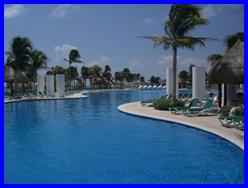 Never a dull moment with Holly. Great staff, nice rooms, huge pool,
activities, swim-up bars. Anyone wanna go on vacation? Timeshare panic. Never a dull moment with Holly. Great staff, nice rooms, huge pool,
activities, swim-up bars. Anyone wanna go on vacation? Timeshare panic.
We’re
not actually in Cancun proper but on the Cancun Riviera. (There’s a world of difference between the beaches and if you’re an ocean
aficionado, you’d do better at the Real Thing.)
|
|
Flora
|
|
 One of us just made
it on the airplane, one of us was five hours
early. Bribe, beers outside, TGIF,
rain coming, One of us just made
it on the airplane, one of us was five hours
early. Bribe, beers outside, TGIF,
rain coming,
|
|
(2” picture, additional text, reg 14 pt Times New Roman, indented .5 inches from
right.)
|
|
Picture Title in bold 18
pt Times New Roman
|
|
(2” picture, additional text, reg 14 pt Times New Roman, indented .5 inches from
right.)
|
|
Picture Title in bold 18
pt Times New Roman
|
|
(2” picture, additional text, reg 14 pt Times New Roman, indented .5 inches from
right.)
|
|
Picture Title in bold 18
pt Times New Roman
|
|
(2” picture, additional text, reg 14 pt Times New Roman, indented .5 inches from
right.)
|