Railroad Sound System and Dual Truss
Bridge additions
12/20/05 -- Trimble
Sound quality is fantastic!!!
Sound system uses 900Mhz
cordless phones on different channels for
sounds to different trains. Inputs to the home base of each phone
can
come from a computer playing wave files or from a train sound system
controlled explicitly. The lower right
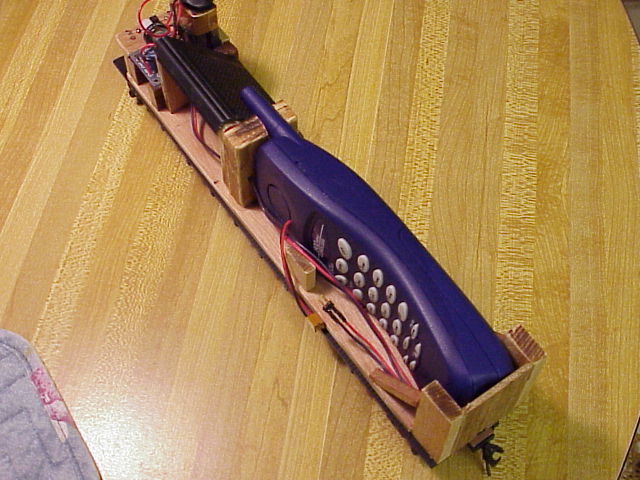
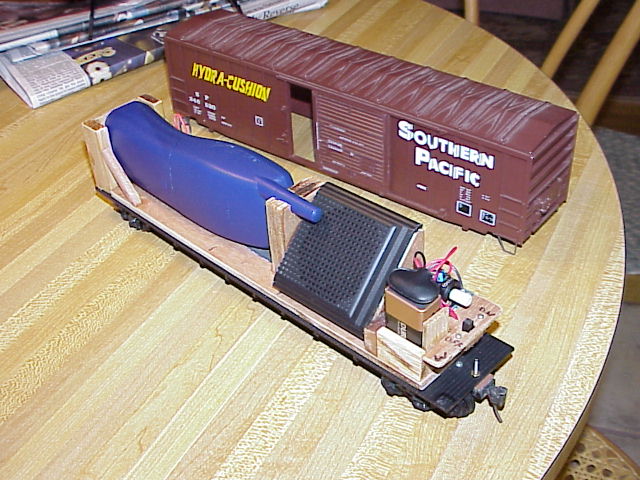
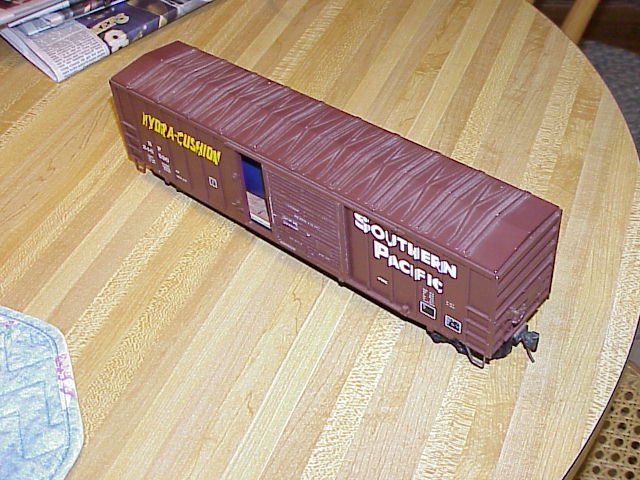
pic is of the first creation using 2 cars and a larger phone
on two
40' flat cars and the second is all inside one 50' box car.
A small 1 watt amp using a 9 volt battery is used to amplify the output
of the handset. I removed the usual ear speaker and disconnected its
microphone.
On the base unit I removed the level limiting transistor, and jumpered
the normal line inputs directly to the sound interface with the
transceiver board using 4.7uf tantalum capacitors. Of the 12 wire
interface (main handset board to transceiver board) one can simply take
turns connecting to each wire until the sound is heard in the ear piece.
One could remove the outer casing of the handset to decrease the space
required but the ease of recharging the handset batteries by setting it
on its cradle would be lost, although, the improvising of a simple
plug-in arrangement as it resides on the
car would not be a difficult either. Alternatives are still being
bounced around.
Click on pics to enlarge:
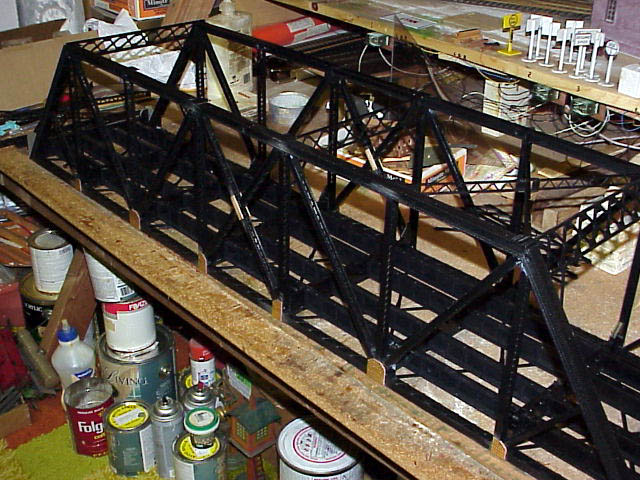
185' Dual Truss Bridge
Addition
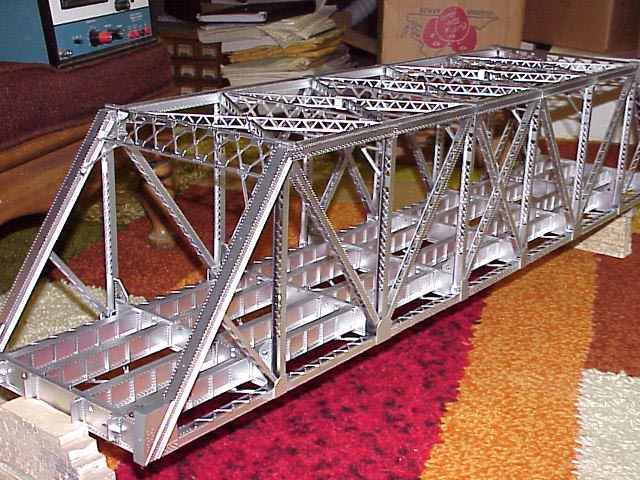
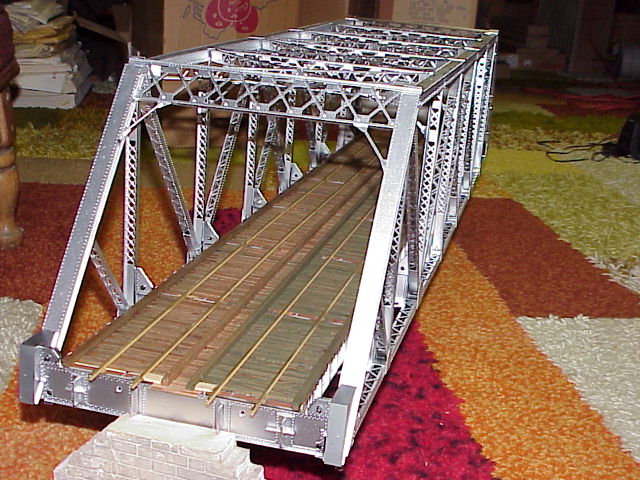
A new Atlas dual track truss bridge with an
added panel relative to the original kit was added to the O-scale
layout to bridge the span at the entrance from the garage.. To
accomplish this one panel extension, a single track Atlas truss bridge
was cannibalized for parts. A new wood set of ties replaces the
plastic ones in the kit and the stainless steel bars buried in the
longitudinal girders were lengthened by welding extensions onto
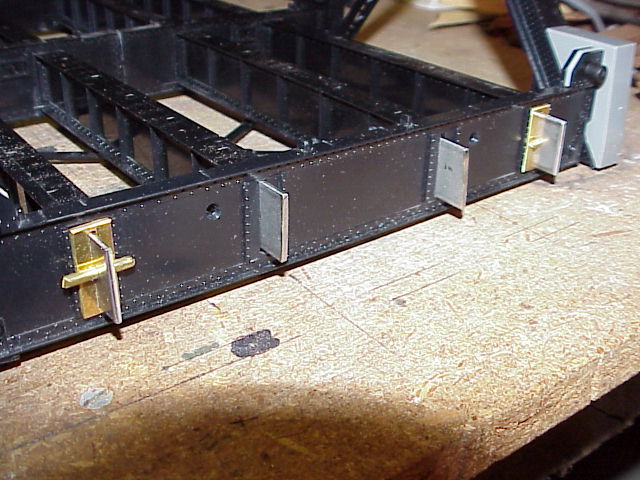
them. It is installed in a breakaway fashion in case it is bumped
since all visitors will have to pass under it.. That is, it is
free to move laterally or vertically with only the resistance of its
mass. The lateral position of the rails is maintained with brass
channels less than 1/32" depth.
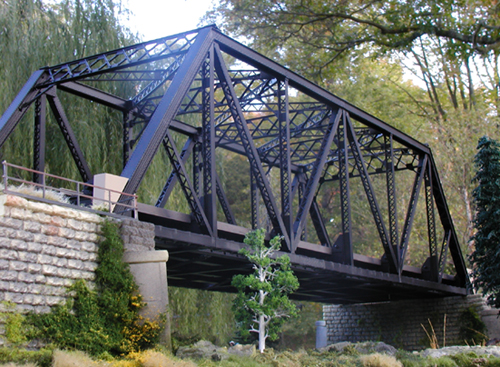
Final Bridge
Click on images for larger
views:
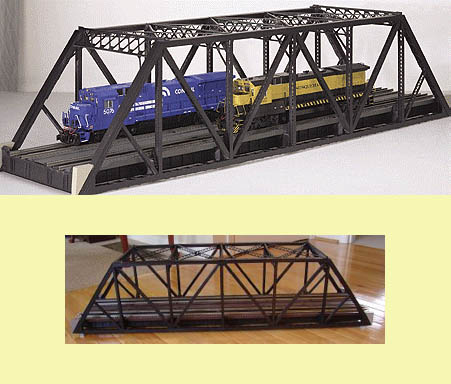
Original Atlas Bridge from Kit:
Click on images for larger
views:
Detail Views Near end of construction:
Click on images for larger
views:
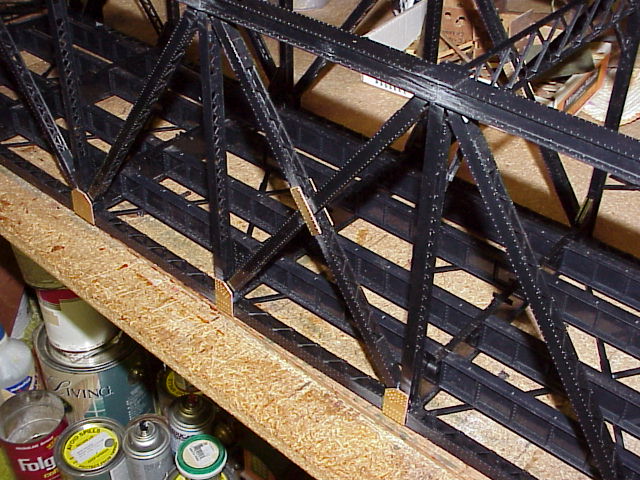
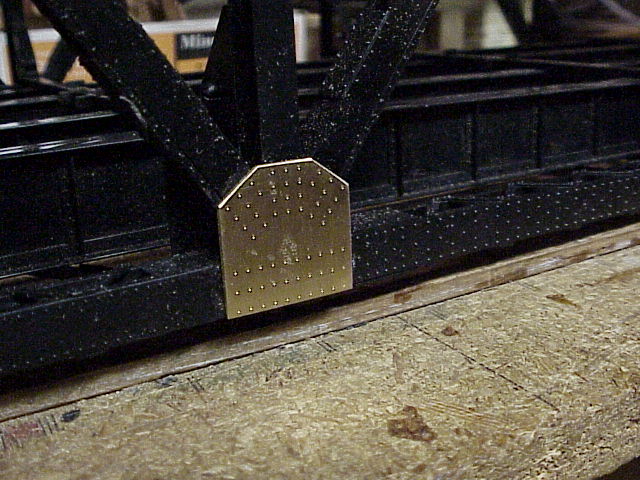
The stainless bars were pinned to provide compression on the
lower portion of the structure
and the computer milled plates were added to enhance the
contribution of the plastic trusses
for stiffening the bridge beyond what the steel bars provide. In
the original Atlas assembly
the trusses contributed virtually none of the bridge vertical
support. Bridge deflection even
with it full of locomotives is imperceptible.